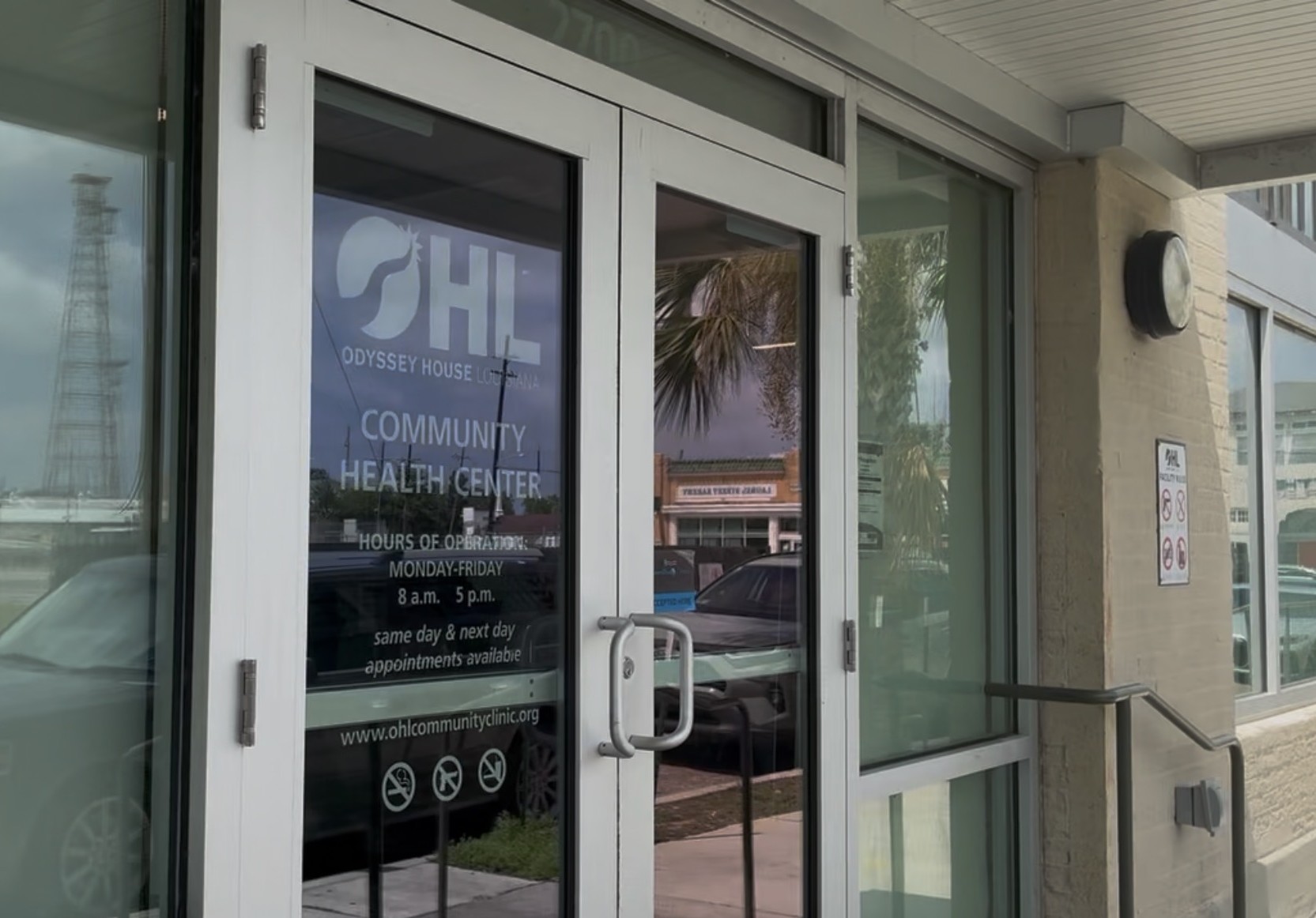
Odyssey House Louisiana (OHL) has partnered with The Policy & Research Group (PRG) since 2012 to secure federal grants and streamline required data collection, management, and reporting. We talked with OHL’s CEO, Ed Carlson, and Prevention Program Manager, Grace Johnson, to see what the partnership has been like from their perspective.
OHL is a New Orleans-based behavioral health care provider and the largest addiction treatment provider in the state of Louisiana. They treat between 22,000 and 24,000 people yearly, according to Carlson. PRG has worked with them on 10 federally –funded projects.
PRG’s partnership with OHL had an unusual beginning — we were competing for the same federal grant. “We [OHL] had competed for a grant with New Orleans AIDS Task Force and they [PRG and CrescentCare] won the grant,” Carlson said. “So, I was like, what did they do that we didn’t do?”
After reviewing CrescentCare’s funded proposal, Carlson was impressed by the data collection and evaluation section. He reached out to PRG, beginning a partnership that has continued for more than a decade. He believes PRG is one of the main reasons OHL has secured so many grants, saying:
“I’ve been working here for 22 years, and we’ve always had at least one federal grant – more most of the time, three to four. I think that one of the keys in relation to that is our relationship and partnership with PRG.”
More Than Grant Writing Support
PRG helps with more than proposals, though. OHL has partnered with us as their external evaluator to conduct implementation and outcome evaluations of a variety of programs funded through the Substance Abuse and Mental Health Services Administration (SAMHSA), as well as self-funded projects. Across PRG and OHL’s broader partnership, we have increasingly moved toward dashboard-based reporting and data visualization tools that make it easier for a broader range of stakeholders to see patterns and engage more meaningfully in conversations about service-related decision-making and program improvement.
Working closely over the years, PRG has gained a firsthand understanding of the challenges of grant-required data collection and reporting faced by organizations like OHL. We have listened to feedback from case managers and administrators and worked alongside them to make the process of grant-required data collection and reporting not only easier on them, but more valuable to them. OHL’s feedback was critical during the development of PRG Insight, our data collection, management, and dashboarding system.
OHL uses PRG Insight to collect, report, and leverage data for multiple grant-funded projects. Additionally, they use the system to collect and analyze data on stakeholder satisfaction. The PRG Insight system includes features such as:
- Electronic data collection forms (including SAMHSA’s Unified Performance Reporting Tool – SUPRT)
- Automatic data uploads to federal reporting databases
- Client tracking tools for reassessment
- Data dashboards to visualize data collected
- Centralized tools and access to data
- On-demand training and an interactive Help Desk
Carlson had high praise for the system. “The dashboard helps to give us the information that we need,” he said. “It shows how we’re able to pull that information together.” He also found that it makes things simple and easy, “especially for the people who do not necessarily understand data analytics.” He believes it is particularly useful in client-oriented fields like addiction treatment, as being able to easily organize data leaves more time to connect with clients. “The longer you keep a person engaged in the treatment process, the more likely you’ll have better outcomes,” Carlson said.
Putting Data Into Practice
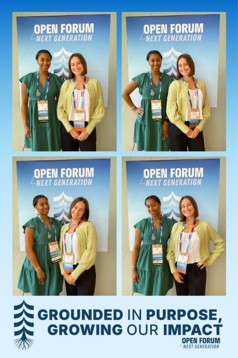
PRG’s Sarah Taft and OHL’s Grace Johnson recently presented on our partnership at the National Network of Public Health Institutes’ (NNPHI) conference in Nashville, Tennessee. The two held a roundtable titled “How Can Data Partnerships Improve Programs?” highlighting our current partnership on a Hepatitis C elimination program.
Their presentation focused on how the data partnership and dashboarding system has helped both organizations build stronger routines for learning, quality improvement, and using data to support public health practice.
“It was a great opportunity to combine programmatic expertise with evaluation and data expertise to demonstrate how meaningful partnerships can improve public health practice,” Johnson said about presenting at the conference. “By working together, we’ve been able to better understand trends, identify opportunities for improvement, and make more informed decisions that enhance our overdose response efforts and ultimately better serve our community.”
Like Carlson, Johnson had positive things to say about PRG Insight. She praised its interactive data visualizations saying, “Rather than relying on traditional static maps and reports, the platform allows users to engage with the data in a more meaningful way.”
According to her, this makes the data more approachable and easier to interpret and leverage. “This transforms data from a reporting requirement into a practical decision-making tool and helps diverse audiences – from program staff to community partners – better connect with the information and apply it to their work.”
From pursuing federal funding to collecting and analyzing program data, the partnership has evolved to meet OHL’s changing needs while keeping a shared focus on using data to strengthen programs and better serve communities.
Through our conversations with Carlson and Johnson, we learned that our partnership with OHL has been seen as prosperous from all perspectives. Ed Carlson concluded his interview with:
“I think it’s really highly important that you have a good partner like PRG.”